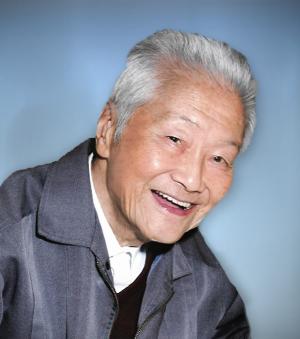
我父亲殷鹏程,1923年四月五号生于安徽贵池殷家汇。他三岁时父母亲就过逝了。从小是在祖父的关爱下成长。父亲从小喜爱读书,勤奋好学深受老师的关爱。初中时期抗日战争爆发,他和一个远亲一起逃去四川重庆。父亲没有高中毕业证书,但他以同等学历考入浙江大学物理系,师从束星北,王淦昌和卢鹤绂等物理学大师。
在浙大读书的时候有兴和李政道同窗一年。家父在浙大的四年中在神的带领下参加了基督教的团契活动,他十分敬畏和爱神。父亲大学毕业后继续完成了他的研究生的学业。
1947年被留校任助教。然后又去了中央研究院工作。沒多久又被调到南京工学院任教。由于他喜欢理论物理的研究,所以在全国院系调整的时候被调到上海复旦大学物理系任教。
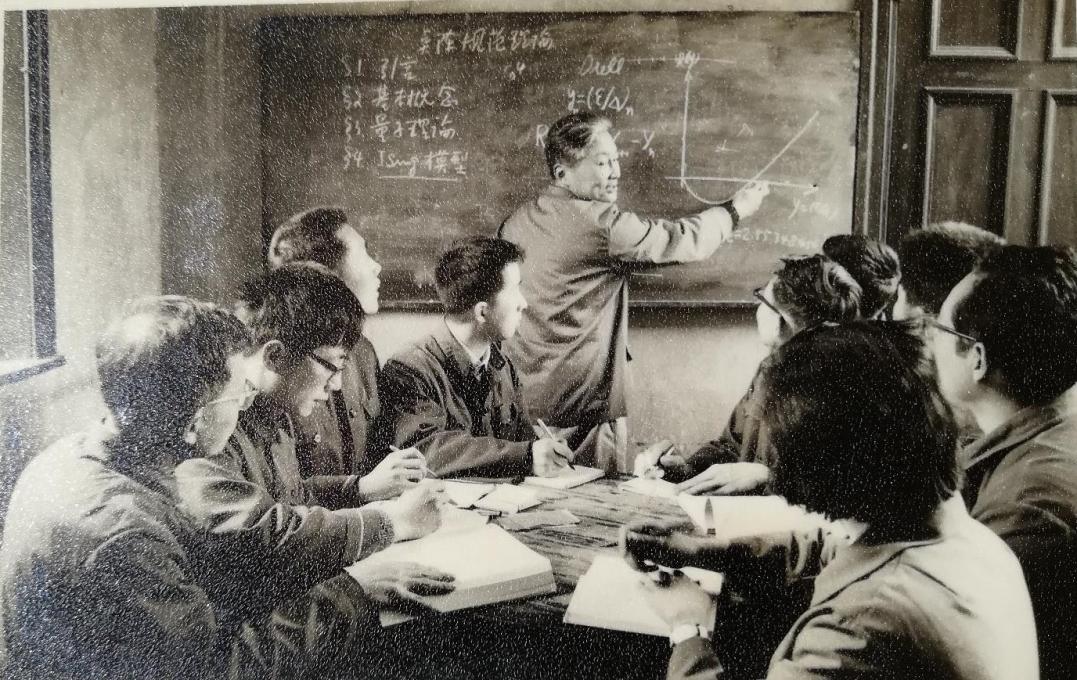
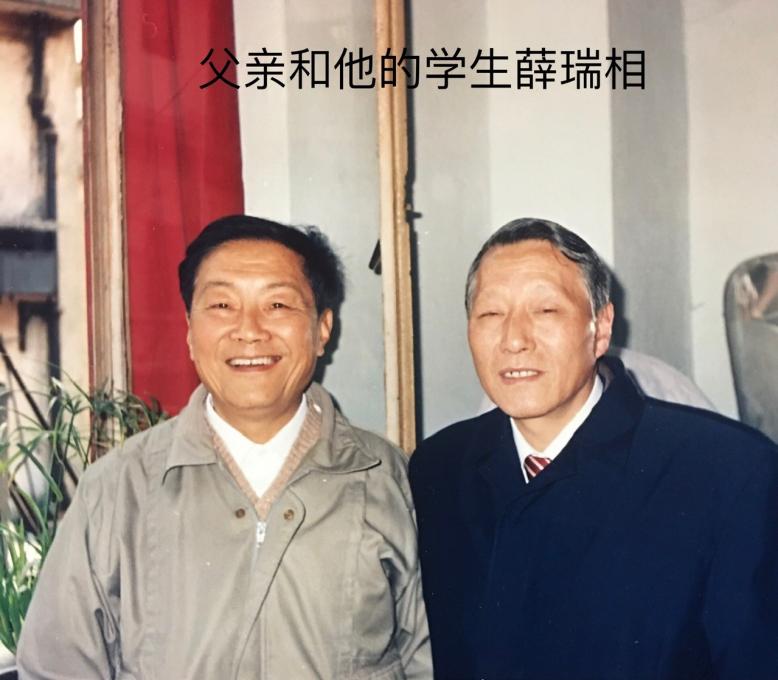
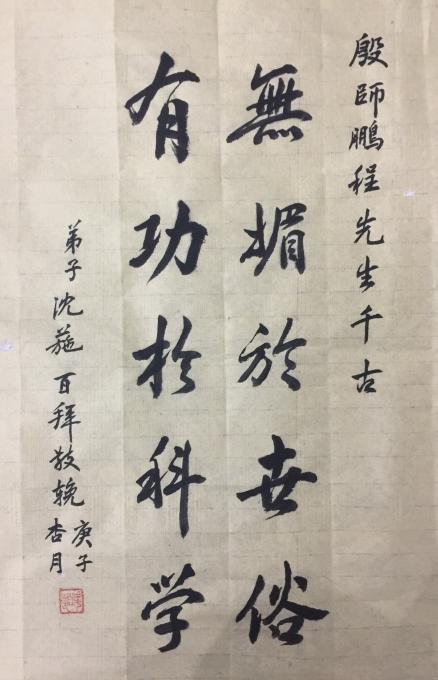
1959年复旦物理系正式成立了理论物理专业,由于父亲喜欢粒子物理的研究,系里就叫他带基本粒子理论的第一批学生。父亲为这些学生开设量子场论等课程,不久就带领这批初出茅庐的弟子开展真刀真枪的科研工作。在父亲带领下,到文化革命前,复旦物理系基本粒子专门化已从无到有,建立了完整的教学体系,在科学研究上已做出了令同行刮目相看的成果,为国家培养了一批高质量的毕业生,我父亲作为专门化的奠基人是当之无愧的。
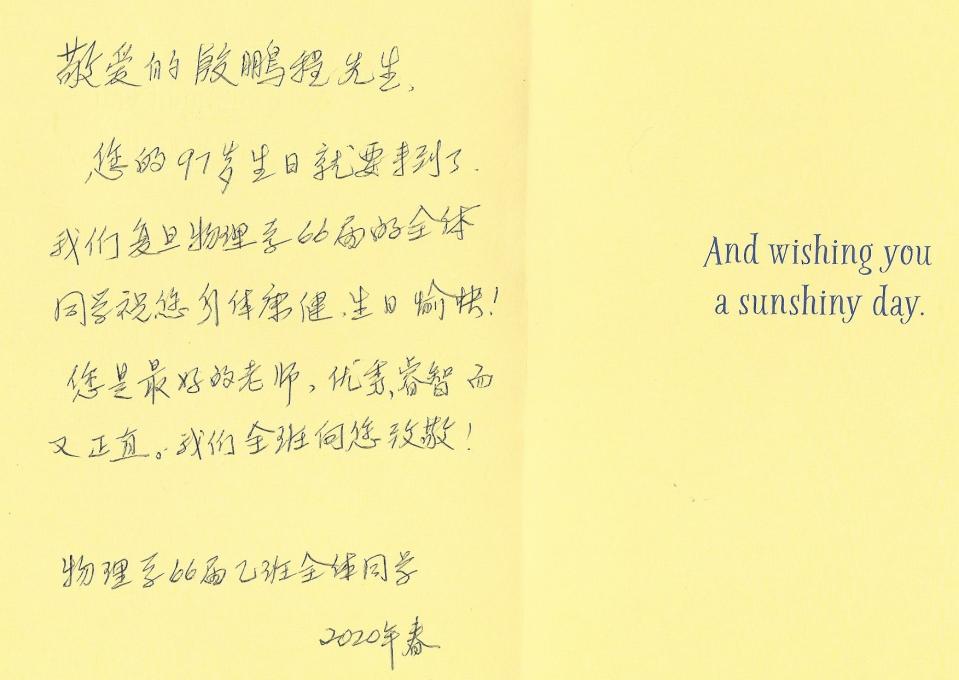
在几十年的教学过程中 他受到学生的好评 。学生赞扬他讲课深入浅出 生动幽默。复旦物理系66 届乙班学生评论说” 殷先生是最好的老师,优秀睿智而又正直”。他除了为研究生开设了量子场论等课程, 还为研究生编写教课书,出版了量子场论一书。
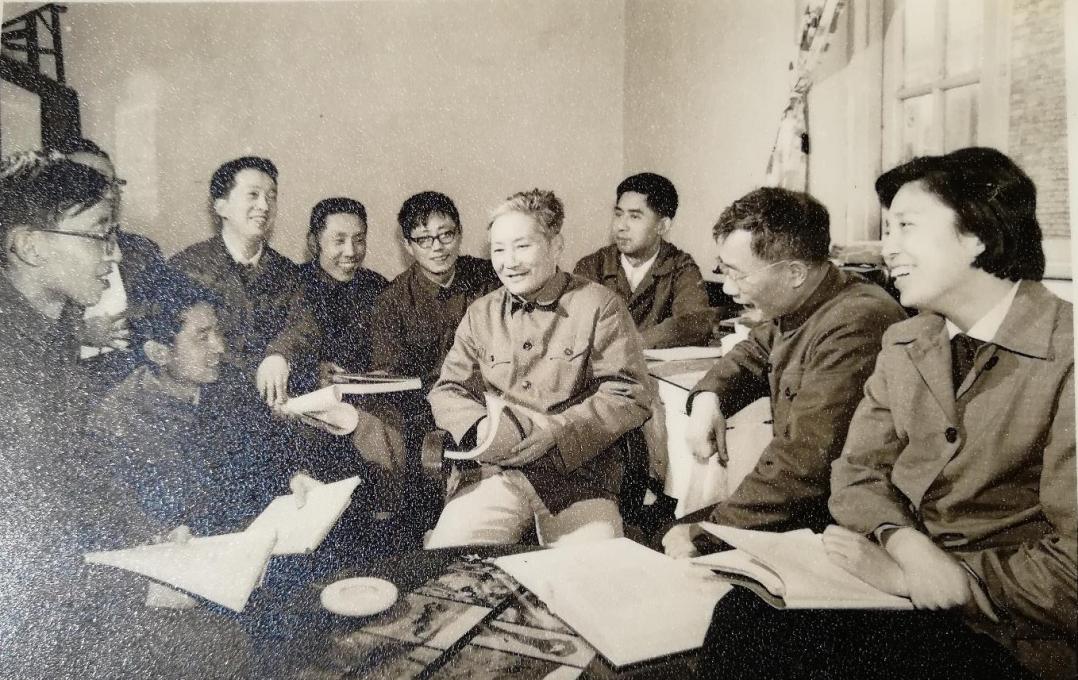
父亲一生光明磊落,这就使他在反右运动时差点被打成右派。但是一九六六年文化大革命开始, 我父亲是物理系苐一批被揪出来的”牛鬼蛇神” 。 每天早晨一睁开眼睛就听到学校高音喇叭里传出”打倒牛鬼蛇神殷鹏程” 当他和一大批复旦老教授隔离审查关在学校, 没日没夜,绞尽脑汁写”检查。” 由于写不出,一夜间急白了头发。 就是在这样的情况下,他还让我们给他送些物理书和关于外文的物理资料。 他说:”不能脱离世界轨道,科学不等人。” 以至于我们插队落户到农村,他都让我们带书自学。他说:”知识总是有用的。”我父亲在文革中,虽然受到很大冲击,在当时那种白色恐怖下,还不忘培养学生。父亲居然组织了一个粒子物理研究小组,招集了一些对理论物理有兴趣的学生,用窗帘把窗户堵得严严实实地,在昏暗的灯光下 的家里向学生介绍基本粒子理论的新进展。学生说:”殷先生是中华理论物理学界泰斗,为复旦创建理论物理专业立下了汗马功劳,在困难岁月中为学生举起知识之火,为中华复兴培养了众多优秀人才。还有学生说:”殷先生是那种认认真真做人,孜孜做学问的榜样影响了我们这一代学生。”
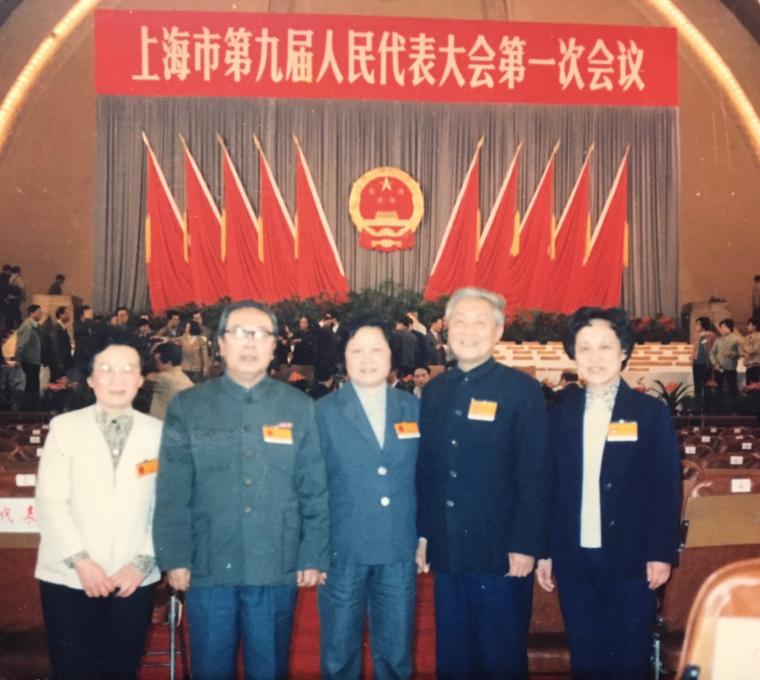
文化大革命结束后父被选为上海市第八届,第九届和第十届人大代表。并被选为上海市物理学会付理事长。改革开放以后国家急需培养人才请了一些外国教授来华讲学。当年中国科学院邀请李政道来给研究生上热力学的课,家父被邀请去给研究生答疑。
1987年被全国超弦理论讲习班邀请去讲课, 后因同济大学要组建物理系家父被调到同济大学帮助组建物理系在同济大学物理系执教直到退休。
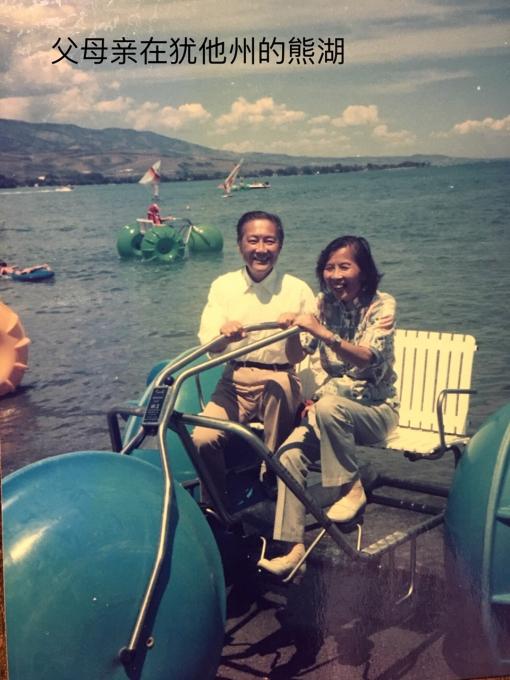
由于子女在美国,父亲退休后来到美国定居。他是个闲不住的人,先后在美国犹他州立大学和南卡MTC大学教物理。他人老心不老,对于那些新生亊物总是充满着兴趣。他学用计祘机,学发Email,利用每个机会学习英语。交了许多美囯朋友。他有个美国好朋友坚持每个星期六下午来和他会话。父亲坚持毎天记英文日记。日记本还是他亲手用废纸装钉成的。
他在大学自学德语 ,老了他专攻数独 ,每日坚持做,并总结了一套规律。父亲办事认真,爱好游泳,旅游,对诗词也很有兴趣 ,经常自己作诗。2002年九月在上海团契遇到一位契友时写下了这样一首诗。旧地逢故知 握手相凝视 白发掩縐额 谈笑忆昔时。还有一首诗是 他乡遇故知,握手叙衷怀,别来均无恙,儿女己成材。 临终前他嘴馋时还作了一首诗,红燒蹄胖 粉蒸肉,清蒸时鱼 油爆虾。
父亲是一位怀旧和感恩的人。他一直和我提起在小学的时候有两位老师对他特别好。令我惊讶的是他连这两位老师的名字都记得清清楚楚。
纵观父亲的一生,他一直受到神的恩典,他做人光明磊落,做事认认真真,对科学的探索弃而不舍。
2020年三月十三日凌晨一点十三分,因病不治 逝世,享年九十六岁。
My father, Yin Pengcheng, was born on April 5, 1923 in the town of Yinjiahui in the province of Anhui. His parents passed away when he was only three years old and so he grew up in the care of his beloved grandfather.
Ever since he was a child, my father loved to read. His work ethic and dedication to learning made him a favorite student of his teachers. Unfortunately, his education was interrupted during the Second Sino-Japanese War when he was forced to flee to Chongqing in the Sichuan province alongside a distant relative. He was eventually able to resume his love of learning, and even without an official high school diploma, was admitted to the Department of Physics at Zhejiang University and studied under renowned physicists such as Shu Xingbei, Wang Changchang, and Lu Hefu. He also spent a year in the same class as Li Zhengdao, a Nobel-prize winning Chinese-American physicist.
Beyond his academic pursuits, my father also participated in a Christian Fellowship during his four years at Zhejiang University. He was a dedicated Christian and loved God, always trying to live by His commandments.
Graduating from Zhejiang University, my father continued his graduate studies and in 1947 was retained as a teaching assistant. Afterwards, he moved to the Academia Sinica to further his research in physics and was eventually appointed to teach at the Nanjing Institute of Technology. When higher education was reorganized under the government of the People’s Republic of China in the 1950’s, my father was transferred to teach at the Department of Physics at Shanghai Fudan University.
In 1959, the Department of Physics at Fudan formally established a major in theoretical physics. As my father was particularly intrigued by research in particle physics, the department called on him to construct the curriculum for the very first cohort of particle physics students. He developed courses on quantum field theory for these students, who would be able to take what they learned from my father and begin their own applied scientific research. Under my father’s leadership, a comprehensive program for particle physics at Fudan University was built from scratch. Additionally, he composed a body of teaching material for graduate students including textbooks published on the subject of quantum field theory. My father truly deserves to be considered the founder of particle physics study in China, as the program he built steadily produced impressive scientific research and high-quality graduates.
Even as he was building the program at Fudan, he was perhaps best known for his love of teaching and nurturing of his students. He was always well received by his students, who praised him for his vivid and humorous lectures. After decades of teaching, his reputation can be best summarized by the 66th class of the Fudan Physics Department who collectively praised him, saying “Professor Yin is the best teacher: excellent and wise and upright.”
Sadly, as history took its course, the intellectual pursuits tp which my father dedicated his life nearly ruined him during the Anti-Rightist Campaign, a political campaign specifically targeted to purge intellectuals. While he emerged from that successfully, my father’s tribulations were not over, as the Cultural Revolution soon began thereafter in 1966.
My father, as a prominent professor, was called one of the “bull ghosts and snake gods,” a phrase commonly used by Mao during the Cultural Revolution to denounce enemies against the state which included most intellectuals. With the turbulent political atmosphere, my father was cast out from the Department of Physics. Even after his removal, the denouncement of my father continued. I remember that every morning, as soon as I woke, I could hear the university loudspeakers blaring “Beat down Yin Pengcheng, a bull-ghost and snake-god among us.”
As he and his colleagues were placed under house-arrest within Fudan University, he was forced to write criticisms about himself and his colleagues as repentance for being class enemies. Try as he might, he simply could not do it. I swear the immense stress turned his hair white overnight.
Even during these times, my father’s dedication to knowledge held steadfast, and he continued to ask us to provide him with physics textbooks and new physics publications from abroad. I still remember what he said: “Science waits for no one, so I cannot afford to become ignorant of new discoveries in science.” As the Cultural Revolution reared its ugly head on me and my siblings, we were scattered to the countryside and forced to labor. Even then, my father exhorted us to bring textbooks to continue learning and reminding us: “Knowledge is always useful.”
Although my father endured great suffering during the horrors of the Cultural Revolution, his mind remained sharp and his dedication to learning unbroken. Even at the risk of suffering further persecution, my father continued to teach fledgling physicists. He organized a particle physics research group and recruited students who were interested in the subject matter. Under the cover of night, he would block all his windows with thick curtains and lecture about recent developments in particle physics to students in a new classroom: his own home.
When I speak to those who risked themselves with my father to continue their pursuit of knowledge, they remember those times vividly. One student proclaimed “Professor Yin was a leader in the field of theoretical physics in China. He essentially established the major of theoretical physics at Fudan, and even during trying times such as the Cultural Revolution, he continued to ignite a passion for learning in his students. His perseverance in continuing to teach the next generation of physicists laid the groundwork for the eventual revival of theoretical physics in China.” Another student recalls: “Professor Yin was the type of person who approached everything in life meticulously, and his dedication to learning has inspired my generation of students.”
As all things come to an end, the Cultural Revolution drew to a close in 1976, and my father began to live the life he had lived before. He was soon elected as a representative of the Eighth, Ninth, and Tenth People’s Congress of Shanghai as well as the Chairman of the Shanghai Physics Society.
As China began to put its past behind it and enacted various economic and political reforms, the country was in urgent need of talent that had been squandered during those turbulent times. To address this, foreign professors were invited to come to China and give lectures to students in the newly reconstructed educational system. The Chinese Academy of Sciences invited Li Zhengdao, Pengcheng's classmate long ago, to come teach thermodynamics to graduate students with my father leading the accompanying recitations.
He also lectured at the National Superstring Theory Workshop and later after that, joined Tongji University to help them establish a Physics Department. He continued to teach at Tongji University until his retirement.
Because his children had all emigrated to the United States, my father settled there as well after his retirement. But retirement did not suit him, and he continued to teach physics at Utah State University and South Carolina MTC University.
Even late into retirement, my father remained young at heart. He never faltered in his love of learning new things and refused to let science leave him behind. He quickly learned how to use a computer and sent emails regularly. He also took every opportunity to learn English and to this end he made many American friends, one of which eventually would visit every Saturday afternoon with him to speak English. My father even dedicated his efforts to writing a diary in English, putting it together through stapling scrap paper together. His dedication at learning new languages was not surprising, as when he was a university student he had taught himself German.
To keep his mind sharp during his retirement, he took up Sudoku and insisted on solving these puzzles everyday. He would try to figure out certain rules that could be applied in all cases, and tested and refined his strategy on harder and harder Sudoku puzzles.
Although my father was serious about learning, he was not always serious. He loved to swim and travel, as well as taking a great interest in poetry, often composing poems himself.
He wrote such a poem when he met an old friend from the Christian Fellowship at Zhejiang University in September 2002 at the Shanghai Fellowship. This type of poem is a form of classical Chinese poetry known as the five-character quatrain, with each line having only five characters to convey a more expansive meaning.
旧地逢故知
握手相凝视
白发掩縐额
谈笑忆昔时
Well-known friends meet again at a well-known place
Shaking hands while looking each other in the eyes
White hairs covering the wrinkles that black hairs never saw
Talking and laughing, reminiscing on the youth of our past
Another poem my father had written in the same style:
他乡遇故知
握手叙衷怀
别来均无恙
儿女己成材
Returning home to meet old friends
Shaking hands, first reminiscing about common memories
Nothing seems to have changed in that moment
Then looking to the future, reflecting on the successes of their children
Even as he lay on his deathbed, my father’s mind was still unbelievably filled with life. He was clearly thinking about the last meal he would love to eat and composed a poem about it. This type of poem is a form of classical Chinese poetry based on the seven-character poems.
红燒蹄胖 粉蒸肉
清蒸时鱼 油爆虾
Shanghai-braised pork hock and rice powder steamed pork
Shanghai steamed shad (fish) and Shanghai shrimp stir-fry
Until the end my father was a nostalgic and grateful person. He would often tell me of two teachers that were particularly kind to him in elementary school and always to my surprise, he remembered the names of those two teachers exactly.
Throughout my father's life, he received the grace of God. He was a man with a bright and clear mind, always approaching things diligently and passionately, and never giving up on his scientific exploration.
At 1:13 am on March 13, 2020, Yin Pengcheng passed away from ailing health at the age of 96.







 Loading ...


